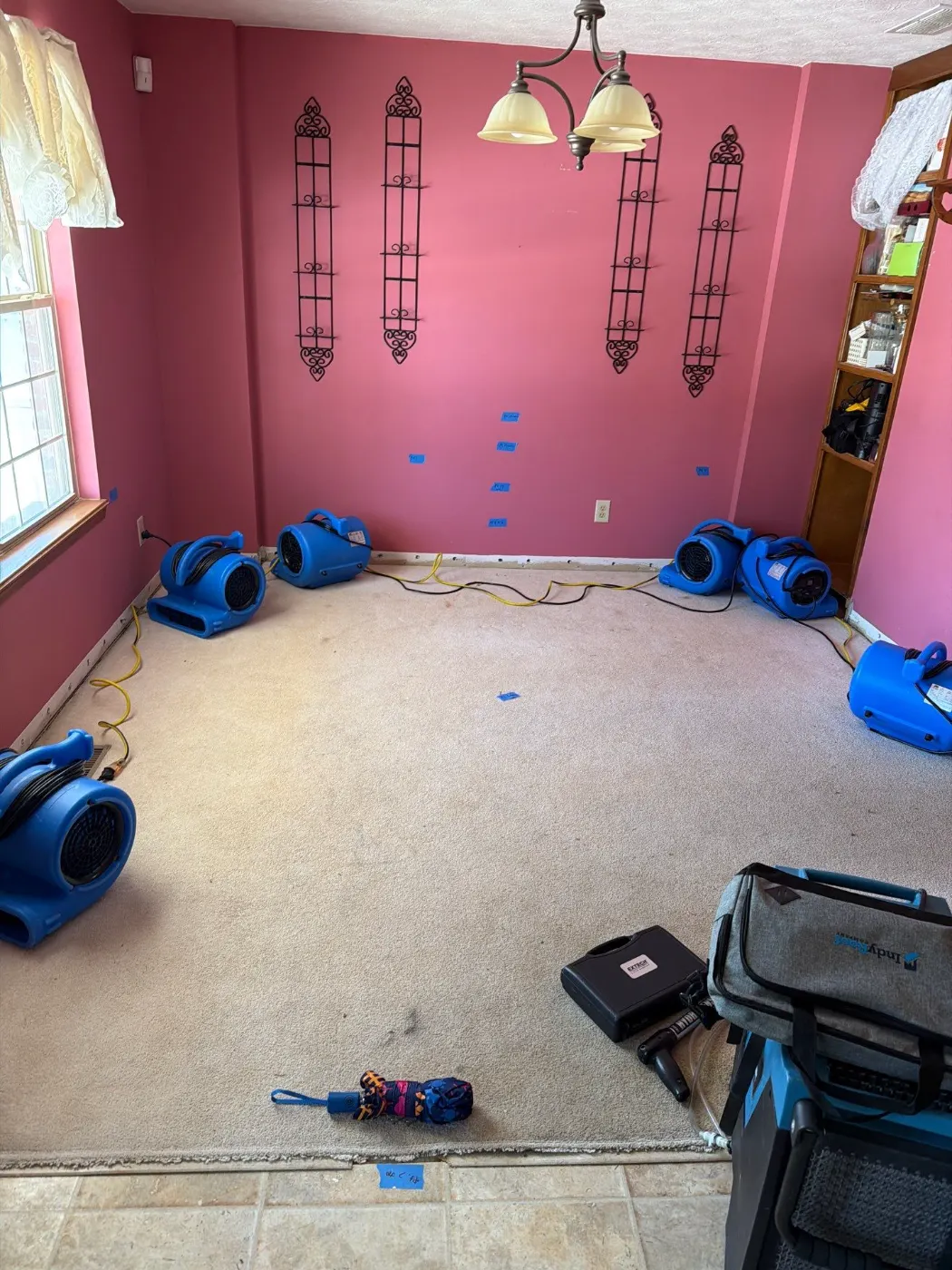
Storm Damage in Shadeland, IN
Water inside your Shadeland home, mapped with meters and dried to numbers you can read for yourself.
Shadeland Water Restoration provides professional Storm Damage in Shadeland: emergency availability every day of the year, certified crews, and coordination with your insurance carrier on approved claims. Call (463) 241-6041.
- Service: Storm Damage for Shadeland homeowners
- Service area: Shadeland, IN and surrounding areas
- Response time: Emergency water calls in Shadeland get crews rolling, not callbacks
- Licensed and insured (License #RC21100059)
- Serving Shadeland, IN since 2018
Storm Damage Cleanup in Shadeland
After a storm in Shadeland, we'll cover the opening first and then dry out what got wet.
Storms Here
Tornado activity around Shadeland runs above the Indiana average. Severe thunderstorms come through in spring and summer. If your insurance company asks for a storm date, NWS Indianapolis keeps a list of past events.
Where Storm Water Ends Up
Homes near Wea Creek and Little Wea Creek can see rising water after heavy rain.
After a storm we can be anywhere in Shadeland, from Flint Creek Estates to the roads around Stidham United Methodist Church and Shadeland Annex. We also handle storm damage in Stockwell, Lafayette, Montmorenci and Romney.
Expert Storm Damage for Shadeland Homeowners
Water from a storm keeps doing damage after the rain stops. Wet attic insulation and a ceiling cavity that stays damp give microbial growth the 24 to 48 hours it needs to start, and once it starts the scope changes and the price follows it. Shadeland Water Restoration dispatches to storm water losses in Shadeland within 2 hours with the extraction and drying equipment to get affected materials back under the moisture content where growth stalls out.
Air tells a crew how fast materials can give up water. Shadeland Water Restoration logs the temperature and relative humidity inside the drying area and outside it on each visit, and adjusts dehumidification when the numbers stall. On a rainy week in Shadeland, those air readings explain why a wall is drying slowly and what to change.
The first stage on site is a walk through with you. The technician asks where you first saw water and which rooms were affected, then photographs each one before anything moves. That walk also settles where the equipment will stage and which rooms need the most attention, so the work in your Shadeland home starts with a plan.
Many policies expect you to take reasonable steps to limit further damage after a loss, and to keep receipts for what you do. Moving belongings or calling a restoration company both count as steps worth documenting. Shadeland Water Restoration logs what the crew does on each visit to your Shadeland home, and the adjuster decides what your policy reimburses.
Water pulled out early leaves more of your flooring in place. Shadeland Water Restoration extracts and starts the drying on storm calls in Shadeland, then reads the subfloor to see what can stay. Call (463) 241-6041 and describe what you're seeing, and a technician will tell you what to do while the crew gets ready.
Signs You Need Storm Damage Restoration
If you notice any of these in your Shadeland home, schedule a free inspection before the issue worsens.
Window or door trim swollen and sticking that opened and closed fine last week
A wet soffit or ceiling corner on a covered porch after wind pushed rain up under the eave
Mold spotting on the back wall of an upstairs closet or behind furniture on an outside wall
Shingles lifted, curled, or missing where you can see the roof from the ground
Water on the basement floor after the power failed and the sump pump stopped
Basement floor drain gurgling or bubbling during a heavy downpour
Window sill corners holding water or finish peeling after a windy storm
Thick ice built up in the gutter with icicles hanging along the edge of the eave
Interior door frames swollen so the door rubs or won't latch
Dark staining or rusted nail points on the underside of attic sheathing and rafters
How Shadeland Water Restoration Handles Storm Damage
We follow these steps in order on every Shadeland job.
Emergency Stabilization
Tarp, shrink wrap or board up goes over the opening the storm made, photographed before and after. Stopping the ongoing intrusion is what lets the drying numbers hold. Details of the opening get passed to whoever's handling the permanent roof or siding repair.
Moisture Mapping
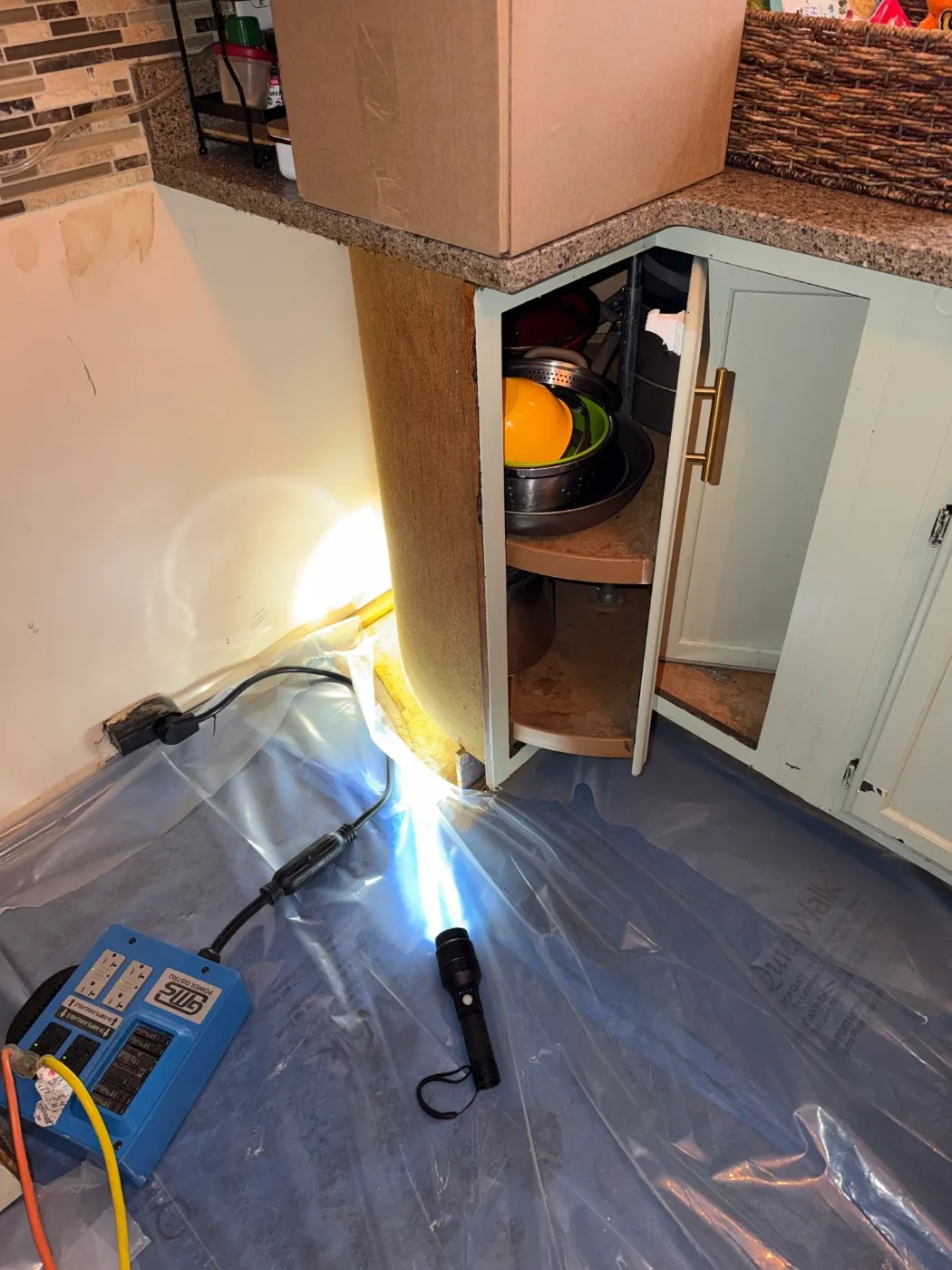
Thermal imaging and penetrating meters cover every room under and beside the intrusion, plus baseline readings in unaffected areas of the same house. The map shows how far water tracked through framing and insulation, and it's what decides which surfaces get opened.
Cleaning Surfaces That Stay
Framing and hard surfaces that stay get cleaned and treated with an antimicrobial once the soaked material is out. Cleaning comes before the drying equipment goes in, so the air movers aren't pushing soil around the room.
Attic and Cavity Drying
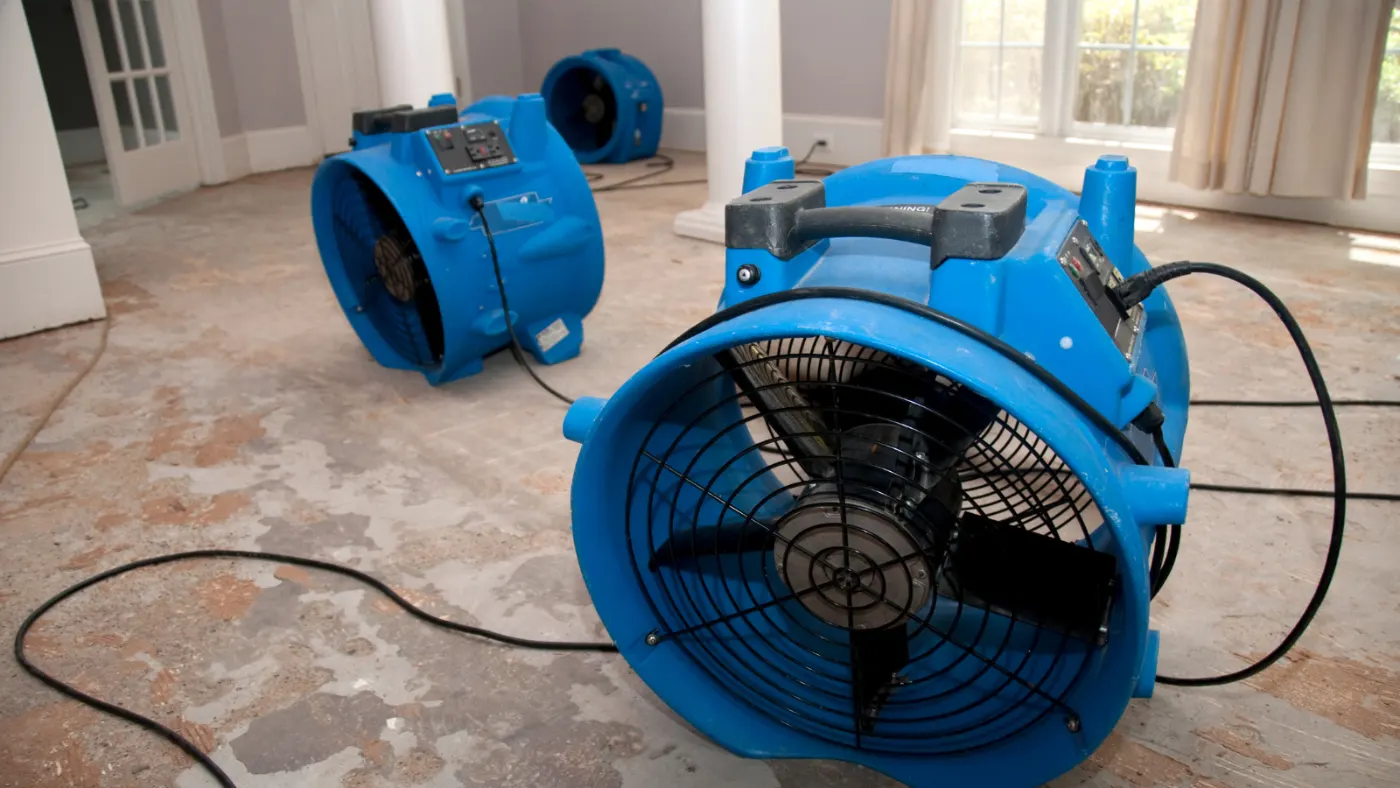
Air movers aim at wet surfaces, dehumidification is sized to the containment volume, and negative air cavity drying runs through small ports where a ceiling or wall doesn't have to come down to dry. Humidity gets tracked inside and outside the drying area.
Reconstruction and Finish Work
Insulation goes back to the recorded depth, ceiling board gets hung, taped and finished, texture is matched to the existing surface, then paint, trim, flooring and anything else that came out. The rebuild follows the measurements taken during the drying.
Storm Damage in Shadeland
Photographs from real storm damage jobs completed by our crew in Shadeland and surrounding areas.


Storm Damage FAQ
Questions Shadeland homeowners ask us about storm damage restoration.
Guidance and Standards for Storm Damage
- The National Weather Service office in Indianapolis posts summaries of recent central Indiana storm and flood events. NWS Indianapolis Event Summaries
- The Indiana Department of Insurance advises against permanent repairs before your insurance company inspects the damage. Check your own policy for what it covers. Indiana Department of Insurance: Insurance Claim Tips
Shadeland Neighborhoods We Serve
We take storm damage calls in every part of Shadeland. Pick your neighborhood for local details.
Other Restoration Services in Shadeland
Shadeland Water Restoration handles the full scope of restoration work. Explore our other services below.
Water Damage Restoration in Shadeland
24/7 emergency response. IICRC certified water restoration from extraction to full dry out.
Learn more →Basement Flooding in Shadeland
Basement water emergencies handled fast. Extraction, drying, mold prevention.
Learn more →Sewage Cleanup in Shadeland
Category 3 biohazard cleanup. Full containment, decontamination, structural restoration.
Learn more →Request Storm Damage Restoration
Reach Us Directly
Our team is available 24/7 for emergencies and ready to schedule inspections during business hours.
Need Immediate Help?
For active water or mold emergencies, call us directly. We are available 24/7.