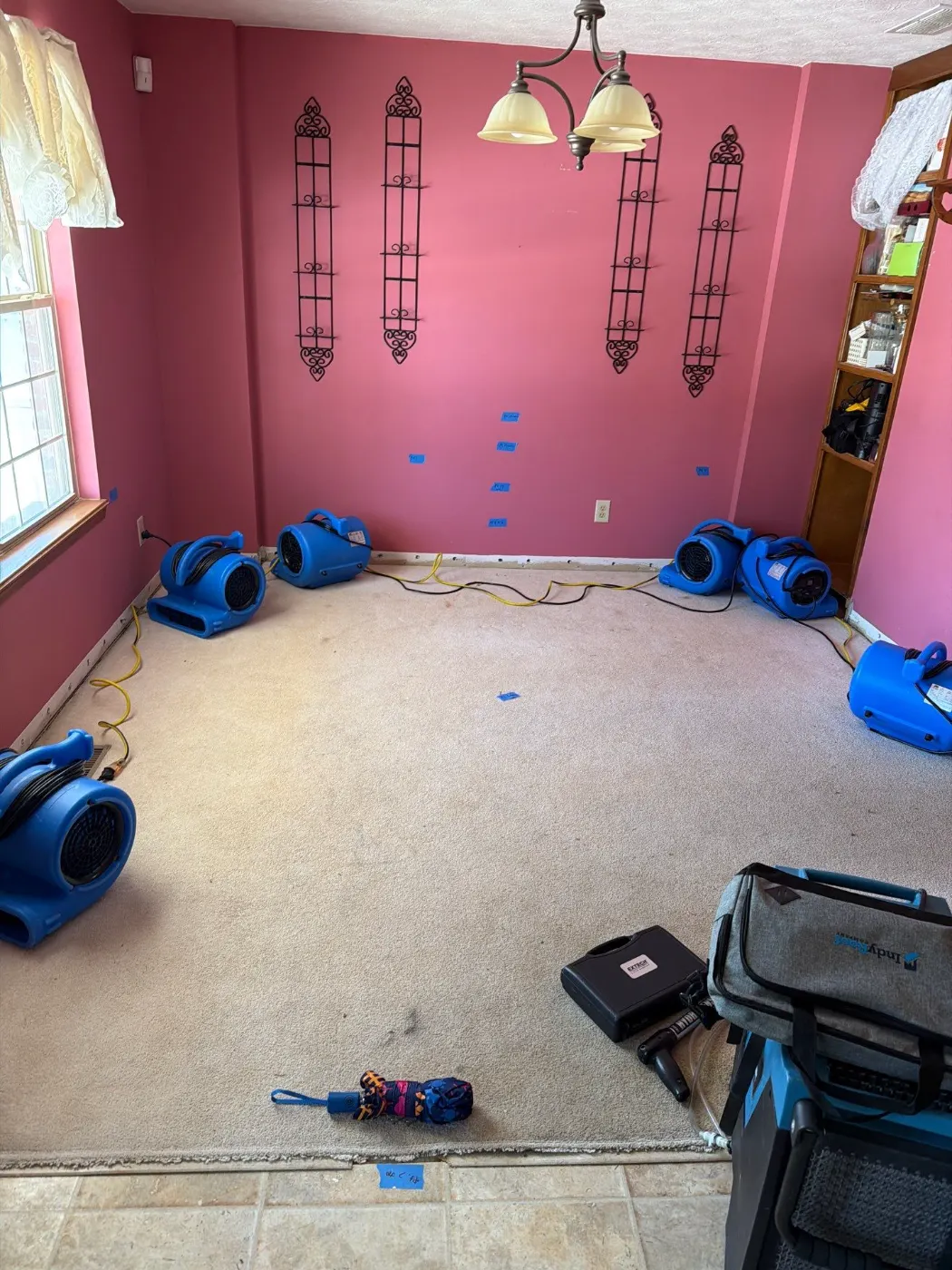
Commercial Mold Remediation in Shadeland, IN
Commercial mold remediation for Shadeland property managers, scheduled around your building with documentation ownership can use.
Commercial Mold Remediation in Shadeland deserves a careful start: Shadeland Water Restoration schedules the assessment, maps the problem, and puts the plan in writing before anything else. Call (463) 241-6041 to schedule.
- Service: Commercial Mold Remediation for Shadeland homeowners
- Service area: Shadeland, IN and surrounding areas
- Response time: Scheduled evaluation at your convenience, typically same week
- Licensed and insured (License #RC21100059)
- Serving Shadeland, IN since 2018
Commercial Mold Removal in Shadeland
For commercial buildings in Shadeland, we'll track down the water feeding mold growth before any material comes out.
Moisture Sources Here
Buildings near Wea Creek and Little Wea Creek can take on floodwater, and anything left wet afterward can grow mold. We'll go over the air handling and any past leaks on the first walkthrough with whoever runs the building.
We take commercial mold jobs anywhere in Shadeland, including the streets around Stidham United Methodist Church and Indiana State Road 25. We also handle commercial mold work in Montmorenci, Romney, Dayton and Stockwell.
Commercial Mold Remediation for Shadeland Businesses
Growth on a lower floor can trace back to a leak two levels above it. Water can follow plumbing chases and pipe penetrations down through the floor plates and wet the drywall on each level it passes. Shadeland Water Restoration traces that path on Shadeland commercial buildings, so the scope covers every affected stack and the repair gets assigned to the right trade.
The water that started the problem still matters once mold has formed. The IICRC S500 sorts water into three categories by contamination level, and water can worsen in category as it sits. Shadeland Water Restoration notes the likely category of the original loss in the scope for your Shadeland building, since porous materials soaked by grossly contaminated water are usually removed and discarded.
Monitoring continues daily while equipment is running. A crew member checks containment integrity, verifies the negative air machines are still pulling and the HEPA filters aren't loaded, takes moisture readings at the same marked locations, and notes anything that changed. Shadeland Water Restoration logs each visit. On a property in Shadeland where the work spans a week or more, that log shows the drying progressed while the equipment sat in the room.
Shadeland Water Restoration documents the loss and bills the work you approved, and coverage questions stay with you, your broker and your carrier. What the team controls is the quality of the record, which means moisture readings tied to locations and dates, photographs that show the condition and a scope that explains itself line by line for your Shadeland property.
Spring thaw and heavy rain are when damp lower levels and exterior walls show their weak points across Shadeland and Tippecanoe County. Call Shadeland Water Restoration when the stains or the smell first appear, and the inspection maps the moisture while the affected area is still small and the walls are easy to open.
Signs You Need Commercial Mold Remediation
If you notice any of these in your Shadeland building, schedule a free inspection before the issue worsens.
Spotting around a supply diffuser or discoloration radiating outward across the ceiling tile
Swollen base trim or gypsum board that's gone soft at the floor line in a restroom chase
An inspection report from a buyer's consultant that recommends remediation of one named area
Standing water sitting in a condensate pan that should have drained hours ago
White crusting or powdery residue on a below grade wall that returns after it's wiped off
Ceiling tiles with staining on the back side that only shows when you lift one out of the grid
Loading dock leveler pits that collect water beside an office or break room wall
Rust or corrosion along the bottom track of metal studs where a wall has been opened
Water cleanup by maintenance staff that used fans alone, with the walls never opened
Snowmelt that pools at an entry threshold and keeps the wall base damp every winter
How Shadeland Water Restoration Handles Commercial Mold Remediation
We follow these steps in order on every Shadeland job.
Initial Call and Access Planning
You describe what you're seeing and Shadeland Water Restoration asks about the building: occupancy, access rules, who holds the keys and whether anyone has opened the area. That conversation sets up the inspection around your schedule.
Negative Pressure Setup
HEPA filtered negative air machines pull the work area to negative pressure relative to the surrounding building, exhausting outside where the layout allows. Manometers confirm the differential across the barrier. HEPA air scrubbers run inside the enclosure for particulate throughout the project.
Structural Drying
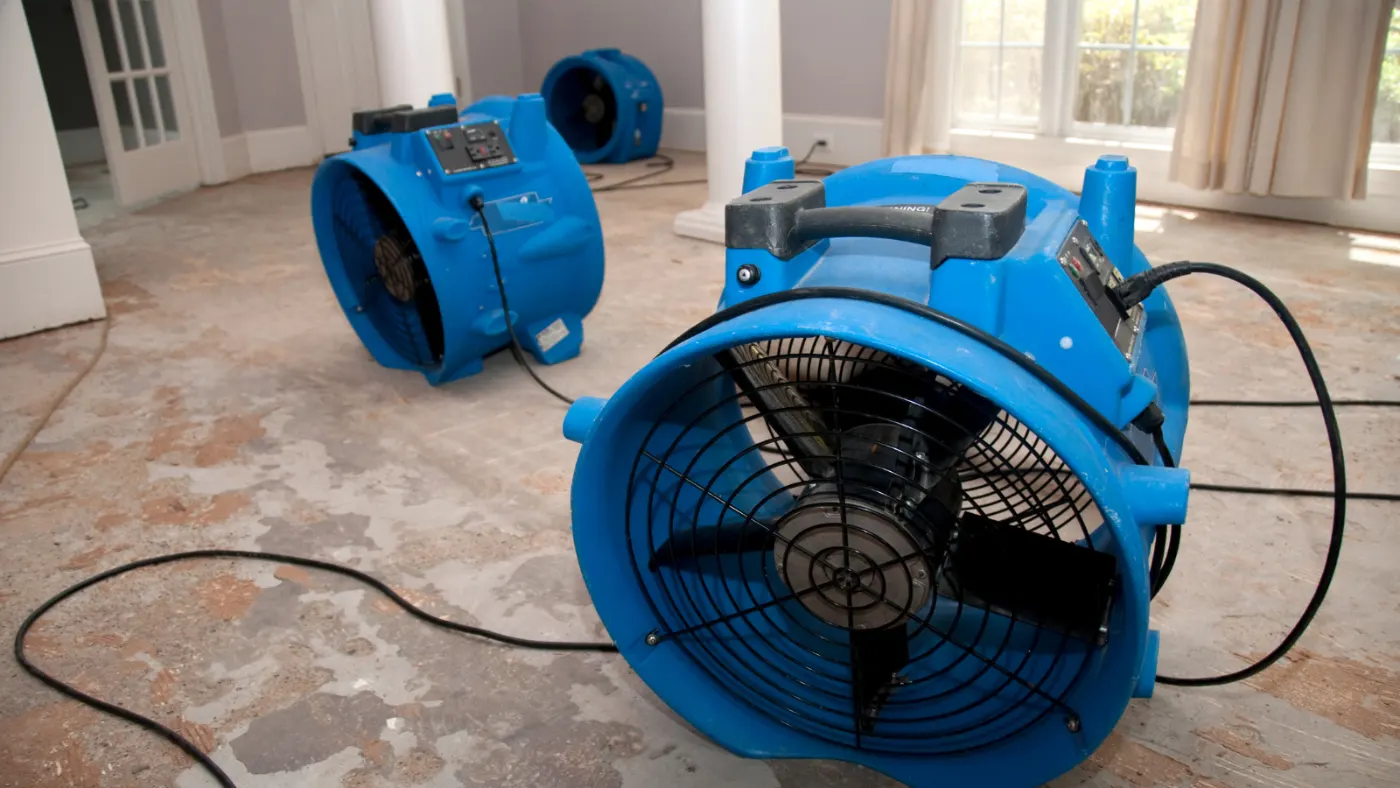
Dehumidifiers and air movers go inside the containment to dry remaining framing and substrate. A technician logs moisture content daily at marked locations. Equipment stays until the readings match unaffected areas of the same building, so nothing gets closed over damp material.
Containment Teardown
Once cleaning and any verification are complete, the crew HEPA vacuums the barrier and folds the poly inward as it comes down. Negative air machines run until the last sheet is off the framing, and the floor gets a final wipe.
Source Correction and Rebuild
The moisture source gets corrected or assigned in writing to the mechanical or roofing contractor responsible for it. Once drying readings hold, Shadeland Water Restoration rebuilds what came out: framing repairs, insulation, gypsum board, ceiling grid, flooring and finishes.
Commercial Mold Remediation in Shadeland
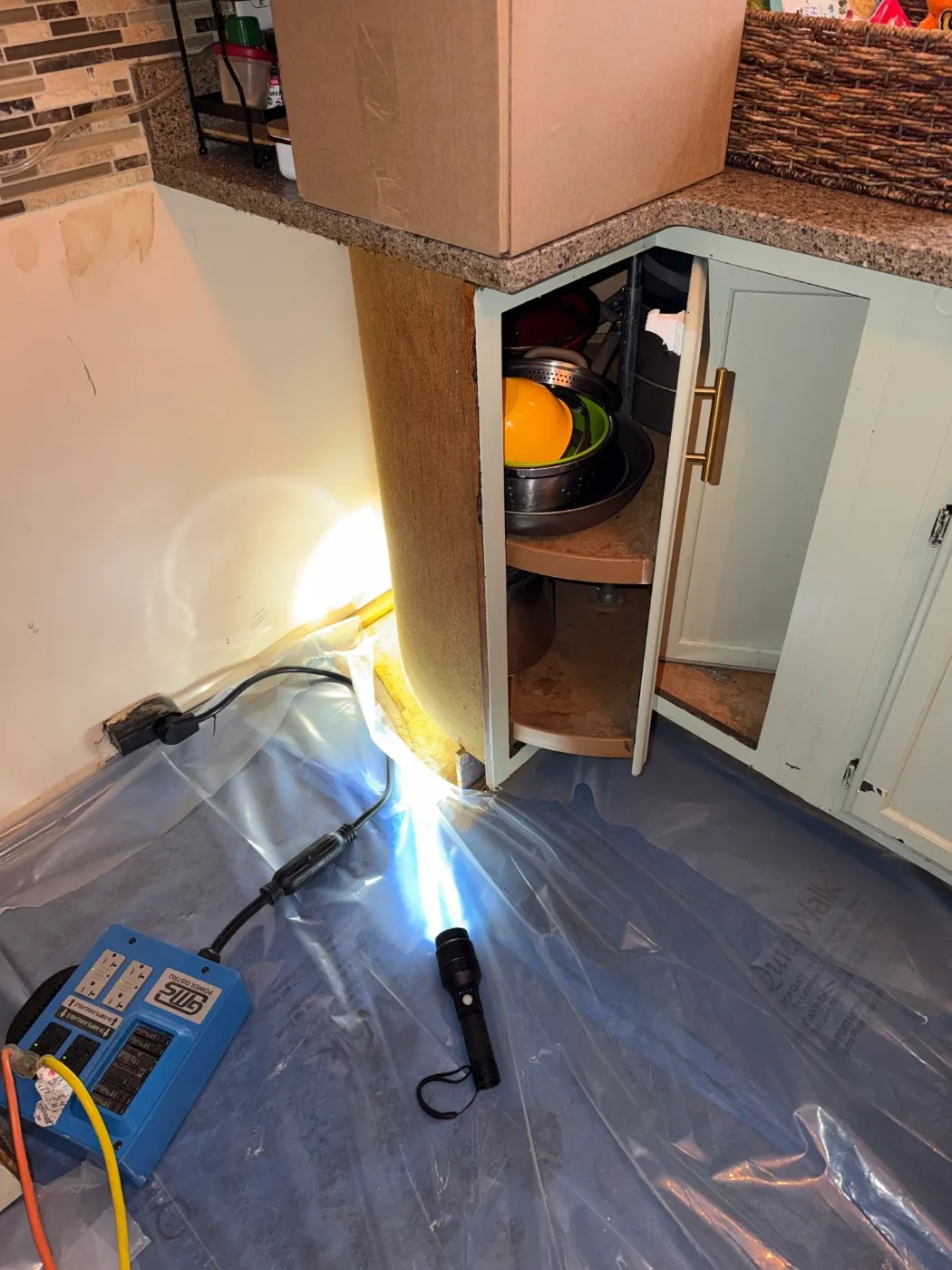
Photographs from real commercial mold remediation jobs completed by our crew in Shadeland and surrounding areas.


Commercial Mold Remediation FAQ
Questions Shadeland property managers ask us about commercial mold remediation.
Guidance and Standards for Commercial Mold Remediation
- The ANSI/IICRC S520 is the published standard for professional mold remediation. The current edition is the Fourth Edition, 2024. IICRC S520 Standard
- EPA’s mold guide says the key to mold control is moisture control. EPA: A Brief Guide to Mold, Moisture and Your Home
Shadeland Neighborhoods We Serve
We take commercial mold remediation calls in every part of Shadeland. Pick your neighborhood for local details.
Other Restoration Services in Shadeland
Shadeland Water Restoration handles the full scope of restoration work. Explore our other services below.
Water Damage Restoration in Shadeland
24/7 emergency response. IICRC certified water restoration from extraction to full dry out.
Learn more →Basement Flooding in Shadeland
Basement water emergencies handled fast. Extraction, drying, mold prevention.
Learn more →Sewage Cleanup in Shadeland
Category 3 biohazard cleanup. Full containment, decontamination, structural restoration.
Learn more →Request Commercial Mold Remediation
Reach Us Directly
Our team is available 24/7 for emergencies and ready to schedule inspections during business hours.
Need Immediate Help?
For active water or mold emergencies, call us directly. We are available 24/7.