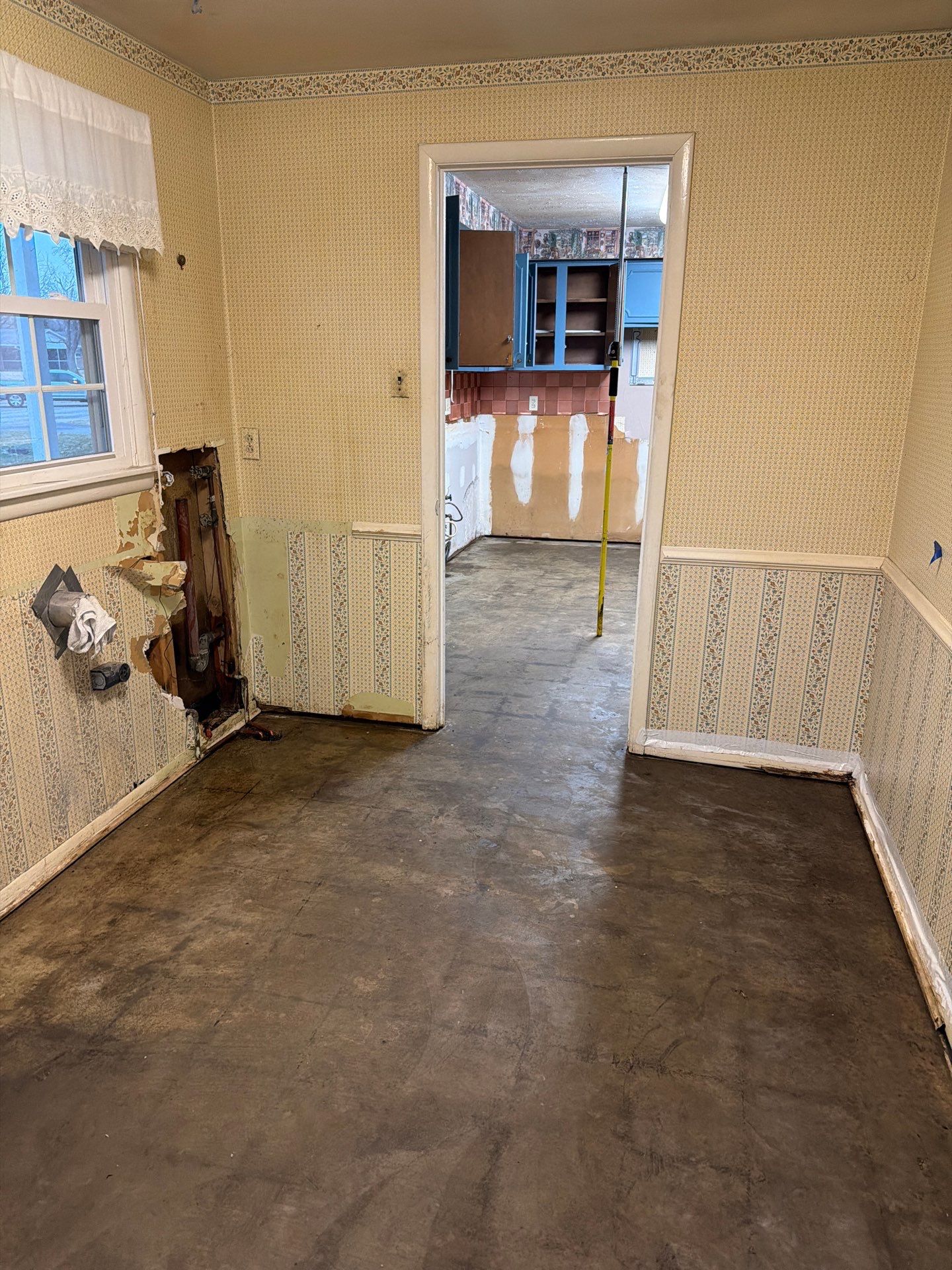
The Call That Started at Minute Seven
One homeowner on the north side of Shadeland called us seven minutes after a supply line under her kitchen sink failed. She heard the hiss, opened the cabinet, saw the spray, and did the one thing that mattered: she ran to the main shutoff in the garage and killed the water to the entire house. By the time our crew rolled up, the spread was contained to roughly 180 square feet of luxury vinyl plank and a strip of baseboard. We extracted, set six air movers and one dehumidifier, and her total invoice came in under $2,400. No drywall cuts. No cabinet removal. She kept her floor.
Compare that to a call we took the same week in a similar home about two miles away. Same failure, same supply line, same vinyl plank. The homeowner spent the first forty minutes calling his plumber, then his brother in law, then his insurance agent, before anyone touched the shutoff. Water ran for almost an hour. We ended up cutting drywall two feet up in three rooms, pulling 90 linear feet of base cabinets, and drying a saturated subfloor for six days. His final mitigation invoice was over $11,000, and that was before reconstruction.
Same water. Same house style. The difference was the first hour. If you want to understand how categories of water affect that math, our breakdown of Category 1, 2, and 3 water damage explains why clean supply water gives you the widest window and why sewage gives you almost none.
Know Your Shutoff Before You Need It
The homeowner who saved her floor in seven minutes did one thing right years before the leak: she knew where her main shutoff was. We ask every Shadeland caller the same first question, and roughly six out of ten cannot answer it without walking around the house. One Shadeland Water Restoration technician tells a story about a couple in a 1990s colonial who spent eleven minutes searching for their main before realizing it was behind a stack of holiday bins in the crawlspace access. Eleven minutes of pressurized water through a half inch ice maker line is about 55 gallons. That is the difference between a $3,000 job and a $9,000 job, decided entirely by storage choices made months earlier.
Walk your house this weekend. Find the main shutoff, the laundry valves, the toilet angle stops, the dishwasher line, and the ice maker line. Label each one with a paint pen or a tag. If your main is a gate valve with a round handle, turn it once a year so it does not seize. If it is stuck, replace it before it matters.
The Hardwood That Almost Made It
A homeowner in an older Shadeland two story called us about a second floor toilet supply line that failed while the family was at a soccer game. Water ran for an estimated three hours. When we arrived, the powder room ceiling below was bulging, and 320 square feet of site finished red oak on the first floor was already cupping. The homeowner asked the question every hardwood owner asks: can you save it?
We set 14 air movers, two LGR dehumidifiers, and a hardwood drying mat system. After eight days, moisture content was back inside range and the cupping had relaxed about 70 percent. The owner chose to live with light residual texture rather than refinish. If your floor takes a hit, our guide on professional water damage restoration walks through the salvage decisions hardwood owners face.
What stood out about that job was the ceiling assembly underneath. The powder room was directly above a coffered dining room ceiling with crown molding and a medallion around a chandelier. We made two small access cuts above the medallion, dried the joist bays from inside, and saved the entire decorative ceiling. A different crew might have demoed the whole thing on day one. The lesson for homeowners: ask your mitigation contractor what they plan to keep, not just what they plan to cut.
What the First Hour Actually Looks Like
When a Shadeland homeowner in a 1960s ranch called us about a burst washing machine hose, our dispatcher walked her through the sequence on the phone while a crew loaded the truck. Here is what she did in those sixty minutes, in order:
- Shut off the water at the laundry valve, then the main as a backup
- Flipped the breaker for the laundry room and the adjacent hallway
- Moved a wood bookshelf and two area rugs off the wet zone
- Took 14 phone photos before touching anything else
- Called her insurance carrier and got a claim number started
- Texted us the photos so we could pre stage equipment
By the time we arrived (in most cases within 2 hours for Shadeland calls), the documentation was complete, the source was off, and we could go straight to extraction. Her claim was approved in three days. Total drying time was four days.
What These Stories Have in Common
Every saved floor, low invoice story we have on file shares three things: the water got shut off fast, the homeowner documented before moving anything they did not have to, and a certified Shadeland Water Restoration crew arrived before the 48 hour mold window closed. Every expensive story is missing at least one of those three.
The Basement That Could Not Wait
A finished basement in Shadeland took on roughly two inches of water from a failed sump pump during a spring storm. The homeowner called at 11 p.m. We dispatched, arrived within two hours, and started extraction by midnight. Because we moved fast, the carpet pad came out but the carpet itself was saved after cleaning and antimicrobial treatment. Drywall was cut at a clean 16-inch line rather than the 24-inch line we would have needed by morning. If you have a basement, the related guide on sump pump failure and basement flooding is worth reading before storm season.
One detail from that night matters. The homeowner had a battery backup sump that had also failed, because the battery was four years old and had never been load tested. He replaced it the week after we finished. Two months later, during another storm, the backup ran for six hours and kept the basement dry. The cheapest mitigation job is the one that never happens.